Paris and Kim’s iconic photo, and how it symbolises society’s body obsessed media.
This article discusses eating disorders and body image in detail. If either of these topics are distressing for you, please do not read.

‘Two Icons, both alike in monogrammed Louis.
On Bondi Beach, where they stayed the scene
Heiress of fortune great, and her sidekick from new money,
Hoops and shades on, one curvy and one lean
Miss Americana with her stylist, two careers built upon impurity.”
Okay, so my rhyme scheme may not be precise… maybe not even necessary, as the two ladies who I’m riddling in reference to barely need be introduced. Even if you have no penchant for pop culture, you would have to be living under several rocks to not know who Kim Kardashian is. Within the last ten years, she has become perhaps the most influential woman in our cultural zeitgeist. Her style, assets and ass have been re-shared, re-hashed and replicated to varying degrees of success by well… almost any Instagram model online, any fast fashion brand (I’m looking at you Prettylittlething) and any celebrity searching to turn their body into a brand even if it involves an *ahem* vagina scented candle a la Gwenyth Paltrow.
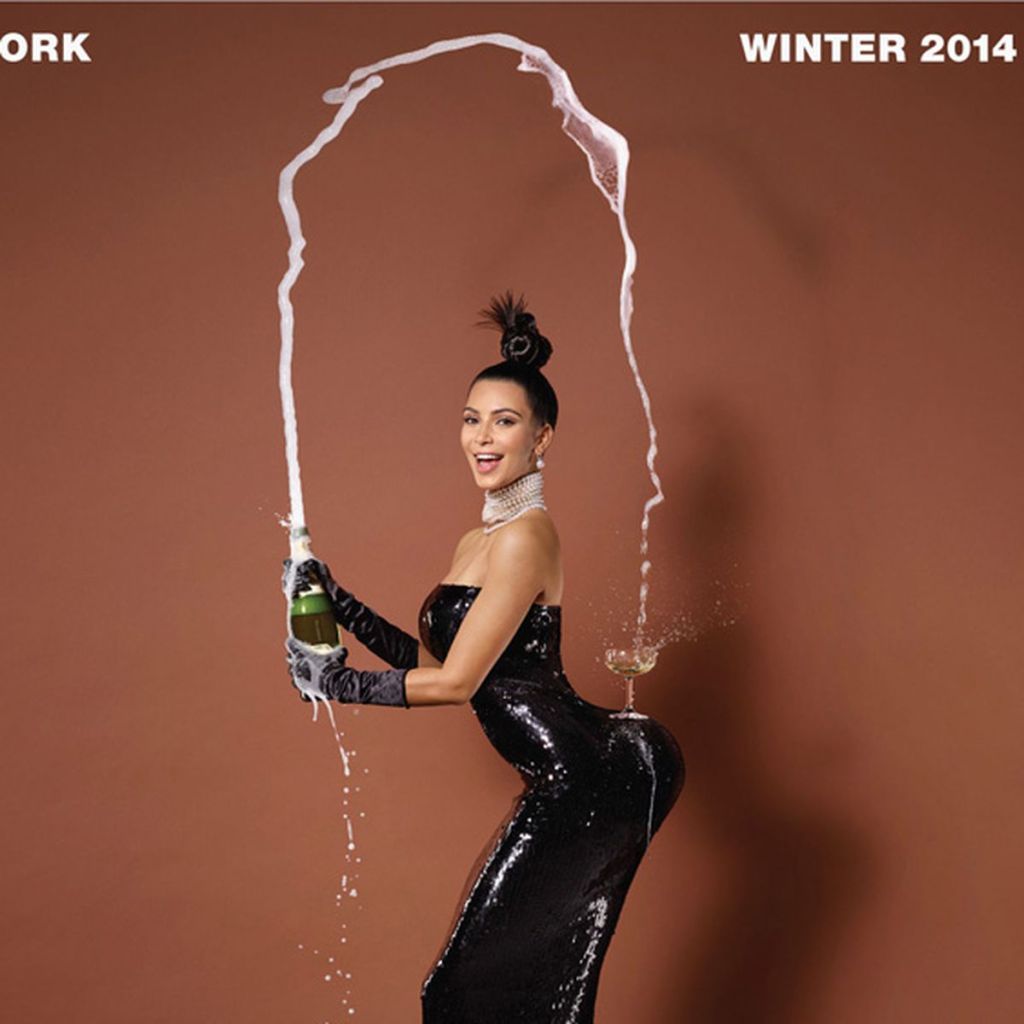
For someone like me, who was a mere toddler when Kim first graced TV screens, it’s impossible to remember a time when the name “Kardashian” held no weight in society. In fact, I remember the exact moment I learned who Kim Kardashian was: In my father’s car. Even on Britain’s BBC Radio One they had a full-blown discussion of Jean Paul Goude’s gimmicky editorial of Kim as if they had just discovered the eighth wonder of the world live on air. In a sense they had. It was only a few minutes later that my dad pulled into a petrol station, and I ventured in for a Cadbury bar and some Lucozade. However, all objectives were forgotten as soon as the sliding doors opened. There it was. On the cover of “Paper” magazine: the ass that defined a decade, glass of Dom delicately balanced a top of it.
Little did I know that Kim, her sisters and their famous figures and faces would come to be so impactful on how teen girls of my generation viewed themselves in the mirror. Say what you want about the BBL body (and oh, it has its criticisms) but there’s a reason that your favourite celebrities went under the knife for that derriere, and there’s a reason that as soon as the Kardashians abandoned the ass your favourite celebrities jumped onto the Ozempic train. Kim Kardashian has captured and catapulted our body and beauty obsessed culture, not once, not twice, but repetitively, in a way that makes it hard to remember she was once a simple student studying under the unrivalled master of “famous for fames-sake”… Paris Hilton.
Part one: The Paris Paradox.
“I don’t get it. What’s she do?
-“She’s totally spoiled and snobby”
“What does she do?!“
– South Park, Season 8, Episode 12, “Stupid Spoiled Whore Video Playset”, 2004
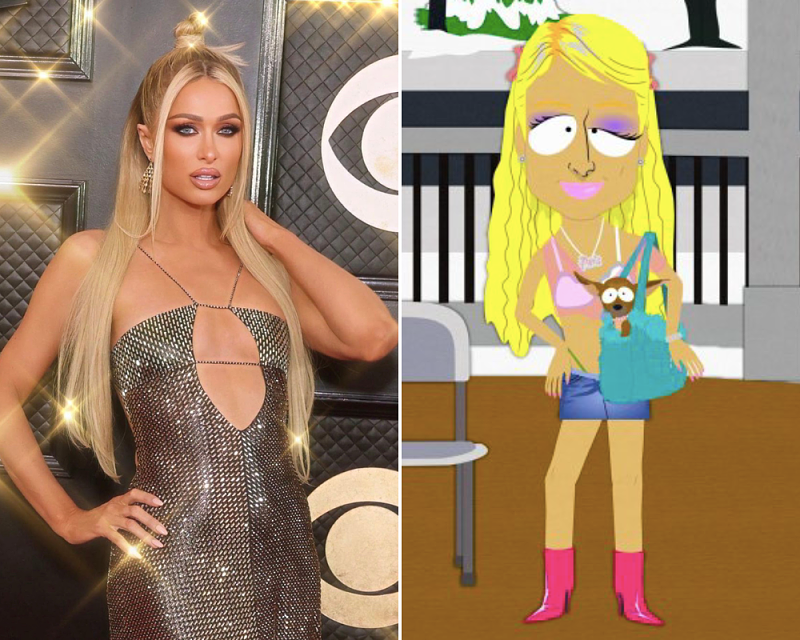
Hilton hotel’s founder Conrad Hilton’s life and legacy can be briefly formatted into two acts – his act as the man who founded the first ever international hotel chain, and his act as the great-grandfather of Paris Hilton, who would go on to be just as worldwide as that bright blue sign spelling her surname. Before Paris was a tour de force in self-promotion, she was catching the eyes of the gossip paper’s paparazzi – and it wasn’t just the family name. Her quirky clothes, aloof yet charismatic persona, and eccentric stunts (just check out this video of her roller-skating into an LA club circa 1999) proceeded her, and as a mere teenager she was invited to model for designers such as Catherine Malandrino and Marc Bouwer before being invited to pose for the pop-culture photographer…David LaChappelle. The fashion industry was catching a breath after the dangerously gaunt ‘Heroin Chic’ era of the 90’s, a cat-walk trend taking its inspiration from not only the grunge fashion trends propelled into the spotlight by the Seattle music scene, but the physical side effects of the musician’s drug of choice. This era can be epitomised by figurehead Kate Moss’s sentiment “Nothing tastes as good as skinny feels” – which encapsulates the mindset thrust upon Gen X’s teen girls. By the time Paris was starting her steady climb into the spotlight, ‘Heroin Chic’ was on its way out, but the body type – and the standards it perpetuated were far from fading away.
Part two: The power of celebrities and their bodies: 2000’s diet culture’s life and death.
If you’re one of it’s 4.48 billion users, it’s hard to remember a time that social media didn’t exist. The retrieval of knowledge from the world’s largest cesspit of content – easily accessible in milliseconds – makes it possible to know what your online pen pal from halfway across the world is doing any minute of any day.
In the beginning there was a little site called Myspace, used to thread those with common interests together, twenty years later and there are multiple platforms stringing users along with titbits of dopamine hits, and on your “for you” page, you’re less likely to see a loved one than several photos from Taylor Swift’s ‘Eras’ tour. Cast your mind back (or imagine if you’re not old enough) to a time where the tabloids reigned supreme, and you got your weekly gossip round up from the boorish Star Magazine or Daily Mail. In hindsight it’s easy to see how gossip columns became synonymous with a cultural fixation on skinniness at any cost.
Without social media being available as a means of self-promotion, A-listers and their bodies were vessels for magazines to sell copies. First, the magazines would get in contact with their ‘sources’ – stylists, hairdressers, PR teams and passersby – to locate a celebrity live in action. Next, a barrage of paparazzi would hound the celebrity whether the attention was welcome or not. The most outrageous/gorgeous/horrendous photos of the night would then be sold to the tabloids, and the next morning many a (mostly male) journalist would pack themselves like sardines into tiny cubicles to dissect each image, coming up with classy headlines such as “BRITNEY BREAKS THE SCALES” or “JUMBO JESSICA SINGS IN MOM JEANS”. Yes. I know.
Whether it’s Bridget Jones tracking her daily calories at the beginning of each diary entry, or the multiple fad diets that came in and out of style like clockwork, the weekly glossies of the 2000s played an indisputable role in millennial women’s self-image. Many to this day feel unable to wear low-rise jeans in fear of not having the ‘right’ body – even though women of all shapes and sizes sport them on Instagram. (Insert video of Michaelia Cothran).
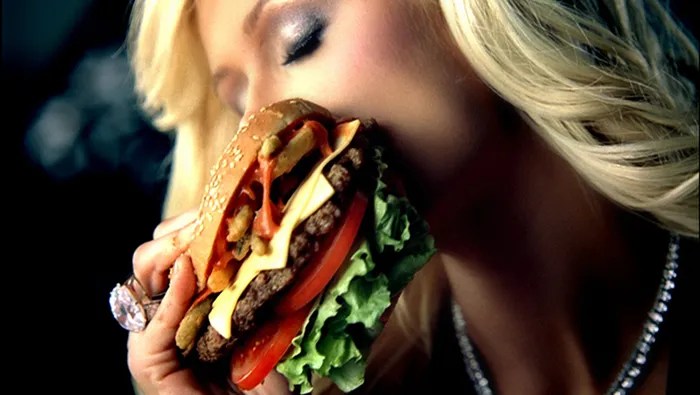
Paris, who suffered from bulimia nervosa in her formative years knew how to play into the public’s perception of her as the ‘perfect body’ by making it seem as if it were an afterthought instead of a defining feature of her star power. Take her banned Carl’s Jr Superbowl advert which depicts her digging into a double cheeseburger in little more than black lingerie, or her simply stating ‘Shopping is my cardio’.
Part three: A turning point.
In 2006 Paris and her fashion footwoman Kim Kardashian strolled Bondi Beach, oversized metallic bags in tow. Gold for Paris, Silver for Kim. Years later the pair would recreate this iconic pop culture moment, except this time Kim would rep the gold bag, and Paris the silver. These series of photographs symbolise a torch passing – from the age of flashing cameras to the age of face tune, from the age of Bambi legs to Brazilian butt lifts, from the age of Hilton to the age of Kardashian. Just four years later, in 2010, a photo sharing app called Instagram would launch, dragging the control over public perception out of the tabloid’s hands and into the hands of the celebrities themselves.
Kim was the right person at the right time in the right place (and uh…positions) to propel the change in western body standards from lean to hourglass. In 2012, a year before that magazine cover, Kim started dating the infamous music mogul Kanye West: with a little help from social media and her boyfriend’s devoted fanboys, (also, this iconic music video) Kim transformed from a Paris inspired reality TV/ sex-tape star to a symbol of changing times in terms of figure and fashion. Seemingly overnight, Kardashian’s ass went from being a source of ridicule…
“Damn, I think Kim Kardashians a man
She stomped on him just ’cause he asked to put his hands
On her massive gluteus maximus again
Squeeze it, then squish it, then pass it to her friend”
– Eminem, ‘We Made You’, 2009
…to being a rear-end of reverence, mimicked and covered by young women worldwide.
Today, everyone on the internet is their own little brand, but with the Kardashians (who are so unsatisfied with their already operated on bodies they photoshop them further) being trailblazers in this new phenomenon, the future of female self-confidence has never been in more jeopardy.
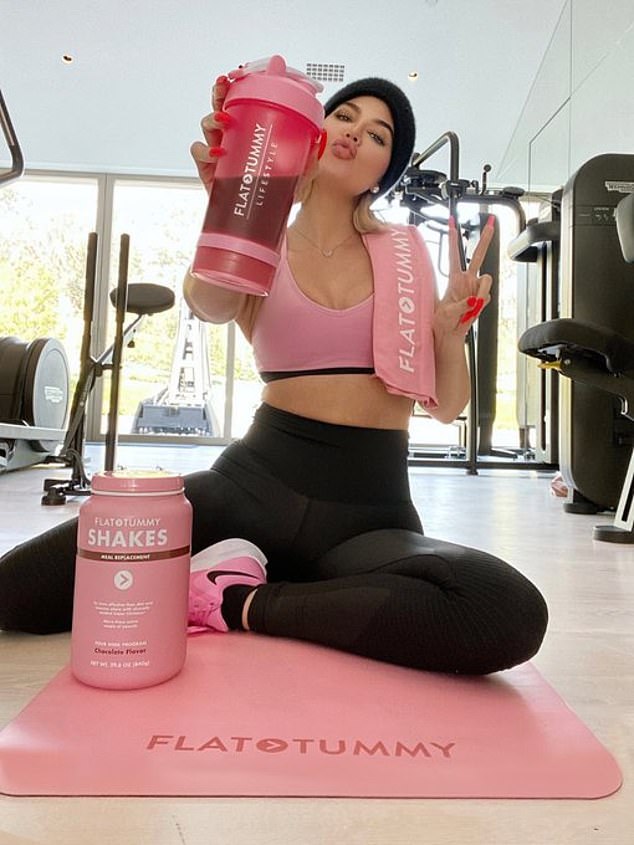
In Hollywood, there is a culture of dishonesty about how surgical results are achieved, and just as Hilton marketed her body as achievable for the average woman even with a diet of purely fast food and no exercise, the Kardashians market their bodies alongside a range of misleading products that claim to achieve those ideal curves under the guise of ‘self-care’.
Because tabloids no longer intercept in the relationship between celebrity and fan, it has never been more personal and parasocial. There has been many a debate on who the responsibility for body image lies with… celebs who flog skinny teas and corsets as magic routes to a literally unreal figure, or those who encourage the culture by liking these photos and buying the products?
Part four: Silicon (e) Valley – money, technology and the Kardashian legacy.
I would like to compare two quotes. One is from both Kim’s younger sister Kendall after being asked if her family promotes unattainable standards of beauty. The other is a song that a thirteen-year-old boy sang specifically about his also thirteen-year-old female schoolfriend during my time in secondary school:
“We all really enjoy taking care of ourselves and being healthy. So, I think if anything the only thing we’re really trying to represent is just being the most healthy version of yourself.”
-Kendall Jenner, ‘The Kardashian Reunion’, 2021
❤ ❤ ❤ <3<3 ❤ ❤ ❤ ❤ <3<3 ❤ ❤ ❤ ❤ ❤ ❤ ❤ ❤ ❤ ❤ ❤ ❤ ❤ ❤ ❤ ❤ ❤
“If you can’t see it through the jeans… then what’s the point?”
– Local Schoolboy, 2017.
Money. It makes the world go round. With the rise social media, it has never been easier to make. A woman’s body, so sexualised and scrutinised, may be the easiest thing to put a price tag on in our male-centric society. So, we can’t point the finger solely at one group of sisters when there has been a push and pull for centuries between what’s better – curvy or skinny? When there have been generations of products manufactured to help a woman achieve whatever physique is currently in-vouge. Marilyn, Twiggy, Moss and Paris have all been hung on a cross as examples of unrealistic beauty… are the Kardashians just the first group of women who have the technology available to them to use this sexist rhetoric as a means to line their own pockets directly? Maybe the finger should be pointed at the pornography industry available to young boys at the click of a button – filling their minds with unrealistic depictions of what a woman should look like- resulting in disgusting comments like the one above coming out of their mouths before they’ve even gone through puberty.
While body editing has been in existence since the days of Michealangelo it has never been so accessible, especially to children. On Tiktok, an app designed with children and teens in mind, there is an automatic filter – and many more optional ones – that smooth skin, decrease the size of noses and increase the size of lips. It also boasts an algorithm that pushes more attractive faces onto the dreaded ‘for you’ page. Reportedly, as of 2020, precisely 396,105 people had Kim inspired augmented butts, and one in 2,351 to one in 6,241 die under the knife. How much must we sacrifice to feel comfortable within our own flesh? Even for an adult, the lines between real and fake on social media are becoming blurrier by the second, imagine being a young girl or boy with unrestricted access to the internet, having your subconscious tinkered with post by post.
We are tired of keeping up with the Kardashians. Recently, reports that the famous sisters removed their implants in favour of a thinner look have inspired the public to ditch their preference for an hourglass figure, and once again look towards drugs such as Ozempic (which the sisters are reportedly on) and diets such as keto to achieve their new “body goals”.
Kourtney: “Kim you’re so skinny you look like a bobblehead.”
Khloe: “That’s the best compliment”
Kim: “Thank you!”
– ‘Keeping Up With The Kardashians’, Season 15, 2018

Part five: What’s changed? A conclusion of confusion.
We claim to be a body positive society. We claim to have switched out our toxic diet culture in favour for ‘self-care’. But is this true? Or are these online movements ploys to trick women into feeling in-control while the digital sphere continues to capitalise off their insecurities? In the last five years, hospital visits for eating disorder treatment increased by 84 percent, with a 90 percent increase for children seeking help. As social media and the world of celebrity slowly turn back to desiring to be as skinny as possible, this time with filler, filters, and face tune allowing us to combine old-age diet culture with new-age editing, it seems that it’s becoming less and less possible for a woman to be comfortable with herself.
While scrolling through social media, I came across an account clearly belonging to an easily persuaded and insecure young girl. It displayed photos of Victoria Secret’s famous models strutting down the catwalk, with a caption that boasted Moss’s quote “Nothing tastes as good as skinny feels” in a swirly light pink font. It has been fifteen years since Kate spoke these words, probably the poster’s lifetime.
The comments were full of blame towards this young girl for encouraging eating disorders and making them seem aesthetically pleasing.
While this is true, is it really the children who are consequences of their culture who should be getting the rap for this? In the recent season of ‘The Kardashians’, Kylie Jenner claimed she should maybe start thinking about the effects she has on body image. Maybe it’s the start of something new…but as a young girl who grew up in what will come to be known as the Kardashian heyday, seeing my peers become caught in their (and the whole of Hollywood’s) digital web of lies, this attempt was so sickeningly fake and late I wanted to throw up in my own mouth.
What do you think? Who holds the key to unlocking real and productive change? Or is history bound to keep repeating itself? And if there is a solution, what do you think this change will look like? Please leave a comment below and I will publish your opinions!
I want to leave you with this quote from Red Hot Chilli Peppers’1999 song Californication, relevant now more than ever:
“Pay your surgeon very well to break the spell of aging
Celebrity skin, is this your chin, or is that war you’re waging?
First born unicorn
Hardcore soft porn
Dream of Californication…
Dream of Californication”

 The Snob Blog
Leave a comment